

The Vintage Vehicle Regulation Act
They say “Out with the old and in with the new” but vintage is coming back to life faster than you think! From clothing pieces to cars. For Filipino vintage car enthusiasts here is wonderful news for you.

Republic Act 11698, otherwise known as the Vintage Vehicle Regulation Act, became law on April 15, 2022, and last January 30, 2023, The Implementing Rules and Regulations (IRR) of the Vintage Vehicle Regulation Act were signed by the Assistant Secretary of the Land Transportation Office (LTO) Jay Art Tugade and to be implemented on April 17, 2023. It applies to automobiles whose original manufacturing date is 40 years or older. The importing, exporting, and registration of vintage automobiles are all permitted by the legislation.
What is RA 11698?
According to the new law, motor vehicles are "an integral part of Philippine culture," and as such, all vintage, classic, historical, or collectible vehicles need to be safeguarded, preserved, and used in accordance with the law. RA 11698 defines historic vehicles as motor vehicles that are at least 40 years old from the official date of manufacture, have not undergone considerable modification, and have the majority of their original or authentic components.
Vintage vehicle owners will find it easier to register and use their vehicles for transportation by creating the "Vintage Vehicle" subclassification and exempting it from some conventional registration requirements.
The new law exempts registered vintage vehicles from having to adhere to contemporary criteria that were not yet in effect when the aforementioned vehicles were manufactured. These regulations relate to clean air, anti-pollution, safety, road use, and the like.
Nonetheless, as mandated by R.A. 8750 or the Seat Belts Use Act of 1999, all automobiles made after December 31, 1967, must be equipped with seatbelts.
What is a Vintage Vehicle?
Under the Implementing Rules and Regulations the Vintage Vehicle is defined as a motor vehicle:
At least 40 years old from the date of production, has an original or authentic chassis, engine, steering assembly, and suspension assembly, and a body that has not undergone general body alterations.
- Substantial mechanical alterations meant to increase effectiveness and safety, such as brakes, suspension, axles, or running gear, are permitted.
- Engine swaps are permissible as long as the new engine has the same general specifications and comes from the same manufacturer or brand as the original engine in the classic car or in a car from the same automaker’s lineage.
Replicas and reproductions of vintage automobiles are not included.
Any car manufactured before 1983 may be considered a vintage vehicle.
Vintage vehicles produced on or before December 31, 1970, are exempt from the Republic Act No. 8506’s ban on the importation, registration, and use of right-hand drive vehicles.
How would the typical Filipino benefit from this law?
The ordinary Filipino can benefit from the Vintage Vehicle Regulation Act or RA 11698 in several ways. First, the law promotes the preservation and restoration of vintage vehicles, which are part of the country's cultural heritage. This can help to promote tourism and cultural awareness, which can benefit local communities and businesses.
Second, the law provides guidelines and regulations for the registration, operation, and maintenance of vintage vehicles, which can help to ensure their safety and reliability on the road. This can benefit both vintage vehicle owners and other motorists who share the road with them.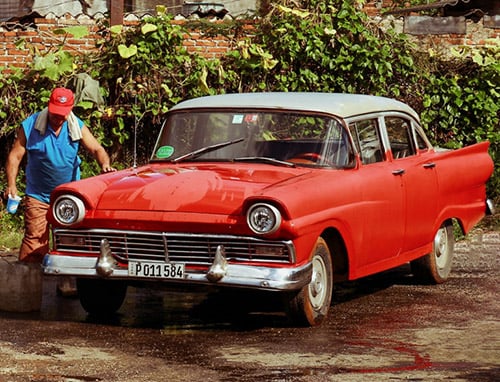 Under the Rule VI of the IRR, it gives the owners of vintage cars the opportunity to register with the LTO even those with lost papers. The government now enables vintage vehicle owners to register their motor vehicles online through the Land Transportation Management System (LTMS) for a more convenient process.
Finally, reviving the local auto restoration business is one of this bill's key objectives. By virtue of the law, businesses and shops that import vehicles and their components as well as export refurbished vintage cars are eligible for fiscal and tax incentives. We could lower the entry hurdle for potential investors through the law. This can also help to create a community of vintage vehicle enthusiasts who can share their knowledge and expertise, and who can work together to preserve and promote this important part of the country's cultural heritage.
To sum up everything that has been stated so far, the Vintage Vehicle Regulation Act, or Republic Act 11698, is a significant development in the automotive industry in the Philippines. With the signing of the Implementing Rules and Regulations by the Assistant Secretary of the Land Transportation Office, the law is set to be implemented on April 17, 2023. This law allows car enthusiasts the opportunity to own and enjoy classic cars. It is a positive step towards preserving the country's automotive heritage and promoting the growth of the vintage car industry in the Philippines.
Import and Export of Vintage Vehicles
If you are looking for a company that can help you in importing or exporting your vehicle, Manila Forwarder is the best option.
Manila Forwarder is an expert in Vehicle Shipment and has a proven track record of successfully shipping hundreds of cars to the Philippines from the US without any issues. Our friendly and courteous staffs are very knowledgeable about the process of importation of vehicles, exportation, valuation of Tariffs, import duties and other taxes. In short, Manila Forwarder is the best choice for the importation or exportation of your vehicle. For inquiries send us an email at info@manilaforwarder.com